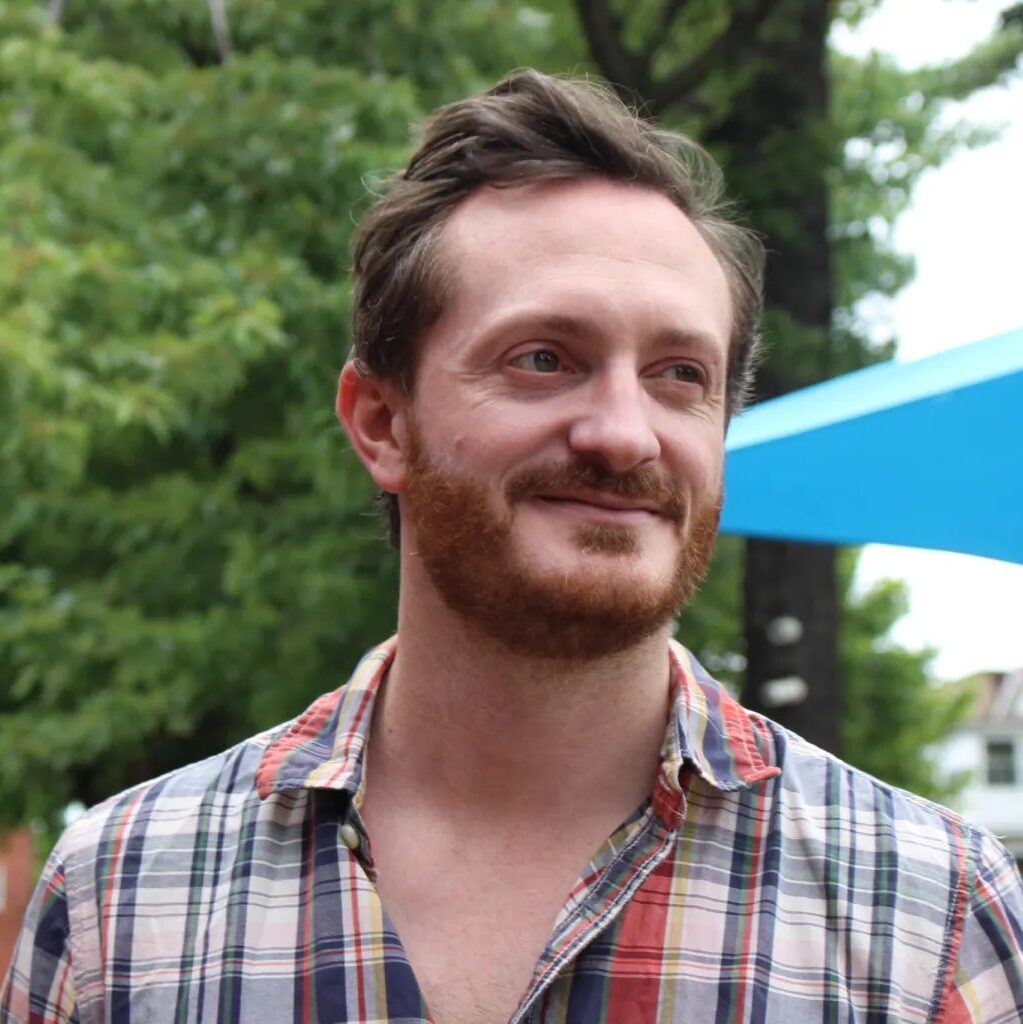
Jonathan Welle is the co-founder and lead organizer of Cleveland Owns, a economic democracy incubator that equips grassroots groups to build wealth and power through collective ownership.
There, he works to show, not tell, ways to organize the local economy more democratically through worker ownership, community ownership, and community decision-making. Over the past few years, after studying Sabbath economics, Jonathan has been learning to integrate his Christian faith and his economic democracy work. In April, he’ll be our featured webinar speaker, where he will share more of his experience developing co-ops.
Brittany Wilmes, Faith and Money Network: What’s your story? How did you build toward the work that you do today?
Jonathan Welle, Cleveland Owns: My story starts way back when I was 10 years old. My family had just moved to Cleveland, Ohio from New Jersey, and I got my own bedroom, which was very exciting. I got to decorate it for my fifth grade year just the way I wanted. So I hung up a picture of my favorite quarterback on the wall, laid out my Beanie Babies on the desk, and above the bed, I had those glow-in-the-dark stars on the ceiling. I thought, fifth grade is gonna rock.
I’m laying in bed one night looking up at these stars, and I could hear my parents down the hallway in their room having a conversation that turned into a discussion and then an argument, and I was getting increasingly tense. I heard my mom yell a word I’d never heard at home before: “Bullshit!”
I knew something was really wrong, and I didn’t understand exactly why. The context, as I reflected on it years later, was that for nearly 20 years my mom had been supporting my dad’s ministry as a full-time pastor while raising kids full-time. She was in a new state, with no connections and no career of her own. She was frustrated that my dad expected the status quo to continue.
I think that what I was hearing was her determination to change course, to push back on the expectations, which I would call patriarchial, that my dad carried. If their relationship was going to survive, she wanted things to go in a different direction. I didn’t put all those pieces together when I was that age, but I did notice that my dad started coming home from work earlier, and my mom enrolled in a master’s program to get a degree in psychology.
In my mom, I had a real example of what it looks like to take a courageous stance in a relationship to address rules that are holding you back. My mom started a family counseling practice that she ran for 20 years. My parents also healed their relationship; they just celebrated 50 years of marriage.
I think in one way or another, I’ve spent most of my professional life finding folks like my mom, who see a system that’s not working for them and stand up and yell BS. That’s taken various forms. In the Peace Corps when I was in the Dominican Republic, it looked like a group of women who got together to start a cheese co-op, despite living within an economy centered around neocolonial extraction rather than building community wealth with the skills and wisdom and talents that people had in that community.
When I was in Peru in 2011 for a third year in the Peace Corps, it looked like starting an exporting co-op with a group of ceramic artisans. These artists had been selling the decorative pots they create using indigenous techniques through middlemen who took almost all the value. So we worked for a year to build a new model so that the ceramic artisans could move up the value chain and reclaim some of not only the financial wealth, but also the prestige and heritage that they were imbuing this pottery with and sharing with the world.
Those experiences helped translate not only the value that I learned around fighting back against systems, but also the value of community. As a pastor’s kid, I went to church three days a week and set up and took down more folding chairs than anyone ever should in their life. Growing up in that world, I learned from my parents who modeled their commitment to those relationships and I also found friendships and meaningful mentors through the faith community.
After the Peace Corps, I took a quick detour into the Obama campaign in 2012 to work on an issue that felt timely and close to home in Ohio, which was an important experience for me to see community organizing in a more formal way. Ultimately, I managed a team of 20 who, on election day, managed a team of 800 volunteers all across the western part of Cuyahoga County, which we won for President Obama.
From there, I went to grad school, where I studied business and government policy to better understand the levers that can influence how business operates. My goal was to influence policy to create enterprises that operate along the values that I was raised with and the women in the Dominican Republic were trying to bring about: cooperative ownership, community wealth building, and economic reform.
During my time at the Harvard Kennedy School, I was exposed to the 1% for the first time. I had a chance to get a corporate job. I thought, hey, if I’m going to do this whole capitalism thing, I want to see it up close. And I did so with my eyes wide open. I promised myself I would leave the corporate world after two years, and that I would never hold it against anyone who decided to give me side-eye because I made the decision to join it in the first place.
At McKinsey & Company, I learned how peak capitalists make power work for them. It was a big learning experience, kind of an on-the-ground MBA. Some of the tools I learned, I draw on day to day at Cleveland Owns as we try to build a different economic system, one based on solidarity.
At Cleveland Owns, we’re trying to do very grassroots economic development projects centered around cooperation rather than competition. It’s wonderful to feel a real hearkening back to the things I learned from my parents about the power of community and of finding courage to address systems that aren’t working for us.
Wilmes: Let’s say you’re speaking to somebody who’s mostly familiar with the economic status quo. How do you explain a cooperative, and how they might recognize it working in the community?
Welle: So there’s the micro and the macro. The micro is what a cooperative is. The macro is why we need to change our economic system to invite more things like cooperatives.
On the micro side, a cooperative is a business that’s owned by the people who use it. Those people can be the people who work there, who make decisions based on democratic values and principles. Or it could be the people who shop there. A common example that many folks know is REI, the outdoor supply company that’s owned ostensibly by the people who shop there. If you shop there, you might get a dividend, some actual financial return based on how much money you spend, your patronage. A third way to structure a co-op is people who produce. So a popular example of a producer co-op is Ocean Spray. They are a group of farmers, mostly in Wisconsin, who pool together to sell their cranberries. Another popular example are credit unions. These are financial consumer co-ops where people come together — more than 145 million Americans are members of co-ops.
In some ways, co-ops and traditional businesses can coexist peacefully. But as co-ops grow and expand and actually take on a greater share of our economic activity, I think they then have the opportunity to challenge some of the existing paradigms. That’s where the macro comes in.
Why is it important to challenge the status quo economic system? One, clearly it’s not meeting everyone’s needs, both in the United States and globally. There are a lot of people who do not have sufficient access to clean water, energy, housing, education, and other basic needs.
And two, the way our economy works today is rapidly depleting our natural world. We’re way overshooting the natural limits of the Earth’s capacity to handle human life.
Co-ops for us are one mechanism to democratize how we decide how to allocate economic resources and who has a seat at the table.
We believe that with a cooperative mindset, we’re able to build in greater accountability so we can do the two things we need to do: meet everyone’s needs and live within the boundaries of our planet.
Wilmes: Let’s talk about Cleveland Owns in particular. What are some of its projects?
Welle: Cleveland Owns is a non-profit economic democracy incubator that starts enterprises and campaigns to democratize our economic system. And we do that in a couple of ways: we start co-ops of various sorts, and we run campaigns to put common resources into the hands of an accountable democratic commonwealth.
On the co-op side, we start businesses that are owned by their workers. For example, we have an incubator program specifically designed for people who want to start a business that’s owned by its workers. We’ve graduated 15 groups in two years and are supporting about 10 worker co-ops of various sizes in various stages.
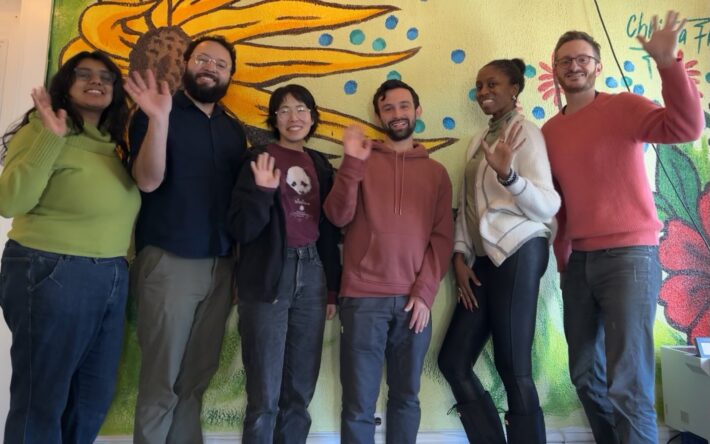
A fun example is Suddy Buddy’s Grooming in Massillon, Ohio — a pet grooming co-op that is owned by the people who work there. They’re bathing dogs. They’re trimming dogs. They’ve got pets of all kinds who stop by. And the workers who do that labor day-to-day own the business and have a right to say how the business operates and a right to share the profits when there is surplus.
Another example is Rust Belt Riders here in Cleveland. It’s a well-known local company that started as two guys on bicycles picking up food scraps to turn into compost. They’ve now grown to about 40 workers who together steward this business that picks up food scraps all across the region, turn that into compost, and then turn the compost into potting soil that they resell. So it’s a full cycle, kind of vertically integrated circular economy model. And they’re a worker co-op.
And we support them in a couple of ways. We do some consulting services on specific parts of their business, and we also lend money through a national Community Development Financial Institution (CDFI) called Seed Commons.
Then we support some community-owned co-ops. One example is Cleveland Solar Co-op. We’re working to build Ohio’s first community-owned solar array on the roof of a church in East Cleveland. We have 100 member owners. We’re going to crowdfund from those member owners. We’ve already signed the lease with the church. We’ve already signed the contract agreement with the solar installer. We bought some of the panels, so we’re bringing that whole thing together. And this is the year we’re going to install a solar array that’ll be owned by the residents nearby, who will see modest returns, we hope, on that investment over time.
Another example is housing co-ops. We have a program that focuses on working with residents who live in apartment buildings who want to buy the building they live in.
And then we’ve got another example of a community co-op I want to spend some time on, because this is relevant for folks who are members of faith institutions. It’s called PowerUp Purchasing Cooperative. It’s a purchasing co-op of nonprofits and houses of worship who come together to buy stuff in bulk. That can include contracts for the things that you have to buy to manage your facilities — things like electric, gas, waste hauling, property insurance, copiers, all that stuff.
PowerUp takes inspiration from our partner, Community Purchasing Alliance, a successful co-op in Washington, D.C. They have about 200 institutions who buy stuff every year through that co-op. They do $40 million together in spending each year, which generates revenue for the co-op of about $2 million.
Wilmes: You’ve already mentioned some personal role models and professional structures that have inspired you. Who do you, as a community leader and organizer, look to for inspiration?
Welle: There’s a long list of examples that have inspired us — structures that we are working to emulate. One of those is the Community Purchasing Alliance in D.C. which I mentioned as a model for PowerUp here in Ohio.
Another example is a group in Minnesota, Minneapolis, called Cooperative Energy Futures. They are a thousand member owners who’ve built $35 million worth of solar arrays that are owned by the community. Because they’re organized, and they’ve got a structure that keeps people engaged, they have political power to shape the policies that impact how the state of Minnesota rolls out clean energy policy. We’re inspired by that.
And another great example is in Baltimore, there’s a group called the Baltimore Roundtable for Economic Democracy (BRED). BRED is supporting a tremendous number of small businesses in the city of Baltimore, creating that critical mass of worker co-ops in a specific geography who have a shared set of values and a shared vision for economic transformation.
We’re inspired by folks who are living out these values not just in theory but in practice. To use the Sabbath economics framework to describe this work: These examples are demonstrating what it looks like to build a version of God’s kingdom on earth by enacting the principles that Jesus taught us to share.
Wilmes: What has been most surprising to you in this work as you bring disparate people together who share a common location but come from so many different backgrounds and opinions and preferences?
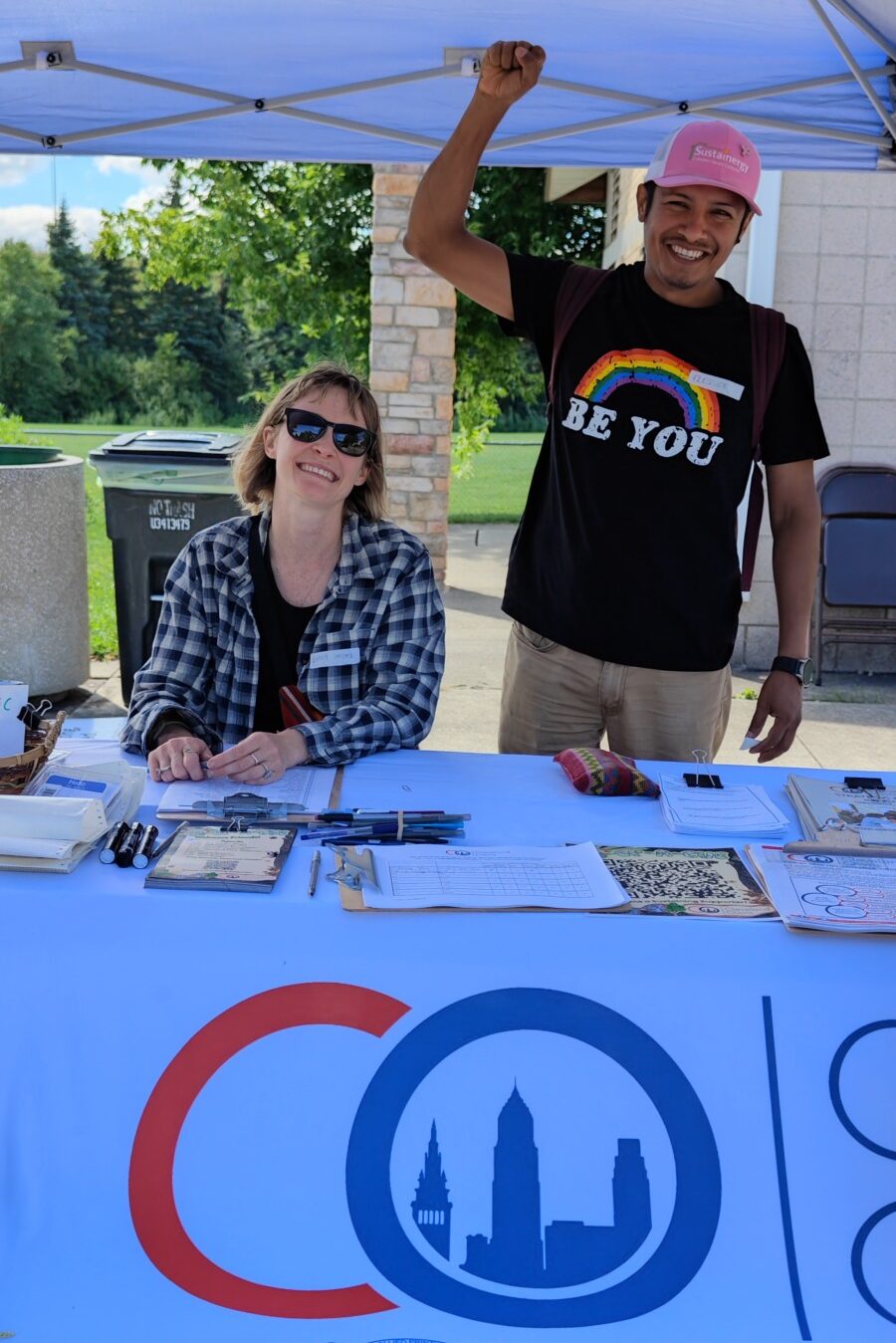
Welle: Well, conflict’s at the heart of human relationships. And that’s a part of the human reality that I think we often run away from. It’s tempting to pretend that it doesn’t exist. But if you’ve been a part of a church or a faith community, you know that conflict exists, that harm exists, and that there are healthy ways to welcome the conflict and learn from it.
Forming a co-op is a forum that is going to invite us to handle conflict. There’s a little aphorism about conflict that helps me keep a positive perspective on this: Conflict is a relationship yearning to be deeper. It’s an invitation to rethink our approach and to understand the person across from us a little bit more.
The communal co-op model takes a lot of hard work, particularly because we’re so well rewarded in our culture by avoiding conflict through consumerism and wealth accumulation. It starts from a place of hope — if we can get this right in a co-op, then maybe we can get it right in the broader society.
Wilmes: What is your vision for furthering God’s economy?
Welle: Sabbath economics is illuminating for me because I grew up in the evangelical community, where the focus was on deep personal relationship with Jesus. My dad was a pastor in the Assemblies of God. I learned a lot in that community, but the focus was really on your current relationship with Jesus at an individual level and your future reward in heaven, essentially.
Sabbath economics has helped me revisit some of those teachings and see them in a new light. For example, I hadn’t seen before that Jesus was teaching us about building God’s kingdom right now — that no one has too much, that everyone has enough.
Sabbath economics points to the manna story, when the Israelites were wandering through the desert, and the way that God met everyone’s needs came with some conditions. God required that they share the manna. No one can have too much and everyone has to have enough. And that’s a telling parable for the type of abundance that we actually experience right now.
Even Cleveland, Ohio, you may think of as a poor city, and in many ways it is, but in many ways it is an abundant city with a tremendous amount of wealth and talent. The challenge, of course, is how is that wealth distributed? Who has the power to decide how that is distributed? What it means to build God’s kingdom on earth, I think, requires us to ask those questions. When we do, we get to the heart of who has the power in our economic system to pick winners and losers.
I think many folks in Faith and Money Network are familiar with the solidarity economy. First steps towards absorbing those lessons can look like a lot of things — a church book club to understand Sabbath economics, participating in a community mutual aid project, supporting or starting co-ops in your neighborhood. That’s really my vision for furthering God’s economy. Taking inspiration from the teachings of Jesus to practice building the solidarity economy at the micro, as we build for the macro transformation we urgently need.
Learn more about our free April 22 webinar with Jonathan Welle and register now!