“Could we just, for a moment, entertain each other’s perspective?” wrote Lydia Sohn in an opinion piece in the October 25, 2026 issue of The New York Times. Sohn mused in her op-ed on the danger of losing the language, meaning, and perspective-giving qualities of the word grace.
This caught my attention as I reflect on my participation in Faith and Money Network’s recent Trip of Perspective to South Dakota. The grace and perspective-taking of that journey were profound and remain strong within me as I continue to process its teachings.
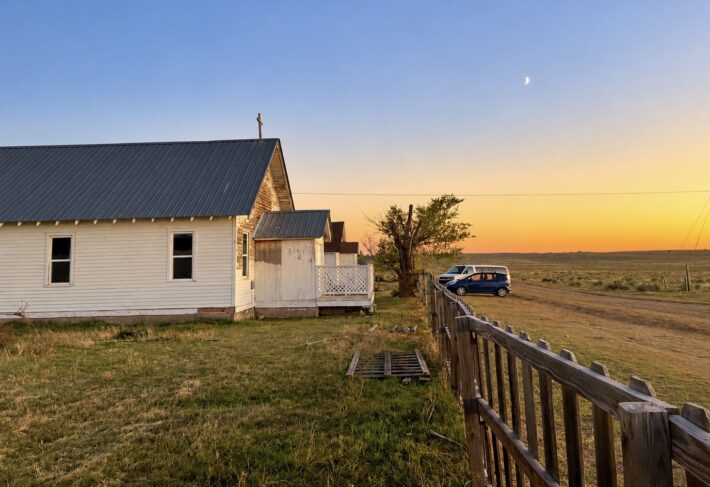
Manifest grace was extended to us by our leaders and, on multiple occasions, family members of the leadership. We were welcomed with warm and open arms. On Pine Ridge Reservation, we visited a cultural center and a local church where we were treated to an intimate Evensong service. With similar grace and warmth, we were greeted by experts who shared with us the stories of the land and its people. For instance, Dr. Craig Howe, the founder and director of the Center for American Indian Research and Native Studies, invited us to Wingsprings, an architecturally fascinating retreat and conference center in the LaCreek District of Pine Ridge Reservation.
Further, wide and awesome vistas were a constant. Vistas, of course, of the land: the Black Hills and Badlands; Bear Butte and the Crazy Horse memorial. And other vistas were opened for me — this gracious granting of new perspectives — by the unfolding of stories with which I was unfamiliar or had nothing more than scratch-the-surface knowledge.
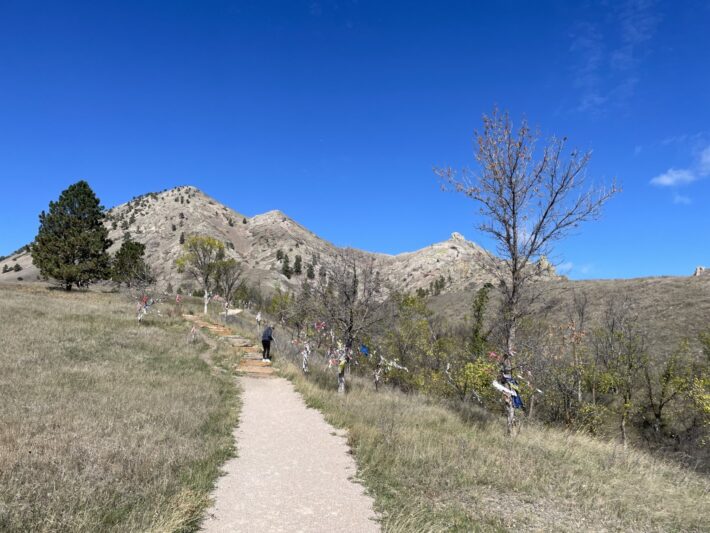
One particular gift was being introduced to the land and its sacredness through the lens of descendants of its original inhabitants. This was so much more than book learning (although I would benefit from doing more of that). This new perspective unfolded a profound reverence of place. Through the grace of the Lakota people who guided and taught us, I was introduced to this perspective.
For instance, being taken to the small graveyard in the Badlands where Black Elk was buried was surprisingly moving. I was interested when we were told we were going there, but I did not expect to experience a deep level of sorrow. The simple graveyard, with some graves adorned, others not, some well-tended, others not, became all the more overpowering when I began to notice how short were the lives of many buried here. With gratitude, I was aware that this profound stop was something that I would not likely have seen on a self-guided or commercial tour of the region.
Thus, as an outsider, I was granted insider exposure to the narratives, experiences, and sacredness of the land. And I learned in a new way about the violence and trauma inflicted — in the past and still — by those to whom the land is a mere commodity, not a hallowed space and place. Particularly memorable and harrowing was a visit to another cemetery: Wounded Knee, where we heard a Lakota man dramatically relay the story of the massacre of unarmed and unsuspecting women and children.
So, then, what to do with all of this? First, I express my gratitude, and I still am searching for appropriate ways to do that. Second, I look for ways in which I can continue to expand and enhance this new perspective. This process is in its infancy, but I am aware of two potential snares: one, that I allow the expansion to be performative and, two, that I lay it aside too soon and replace it with other endeavors. It is hard to be that brutally honest with myself, but I have to acknowledge how often that has occurred. It is human nature, most likely, so I can give myself some grace as the realm of faith is not exempt from our attention economy, while at the same time being careful not to fall prey to that tendency. Being aware of this risk helps but here, too, is where I seek God’s grace and direction so that I may stay with and learn from this graciously granted and grace-filled perspective.
As I write this, I wonder how I can use being with land as a setting for my seeking of ways to incorporate this perspective. My home bases, Rhode Island/Massachusetts and North Carolina, have their own Indigenous people with their own stories, their own sacred sites, tales of exploitation and theft and massacre and dehumanization. I can transform my perfunctory interest in action and actually learn more about native people and stories close to home. I can visit my local lands’ sacred sites and seek opportunities to expand my perspective even more.
As I begin these next steps, I ask God how I can use this new perspective, which was given so freely by and through the grace of our teachers, to give back in some way, acknowledging the bounty that I have been given.
Justine A. Dunlap | November 2026
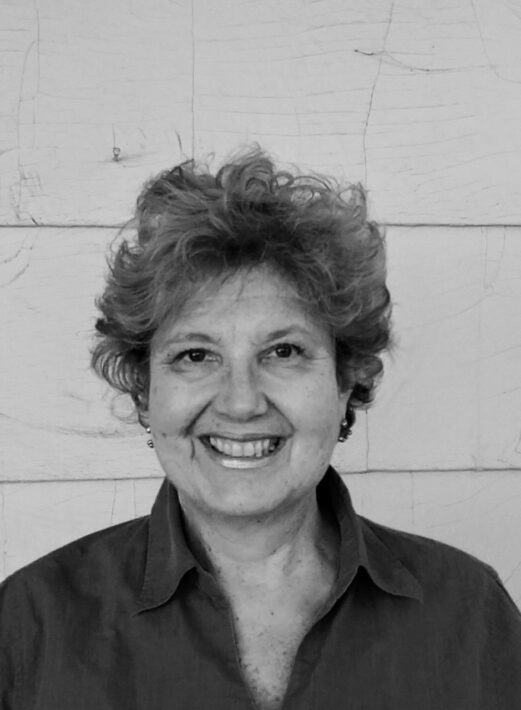
Justine A. Dunlap lives in Providence, Rhode Island, which sits on the ancestral homelands and territories of the Narragansett, Pokanoket, Nipmuc, and Niantic peoples. She is Professor Emerita at the UMass School of Law.